
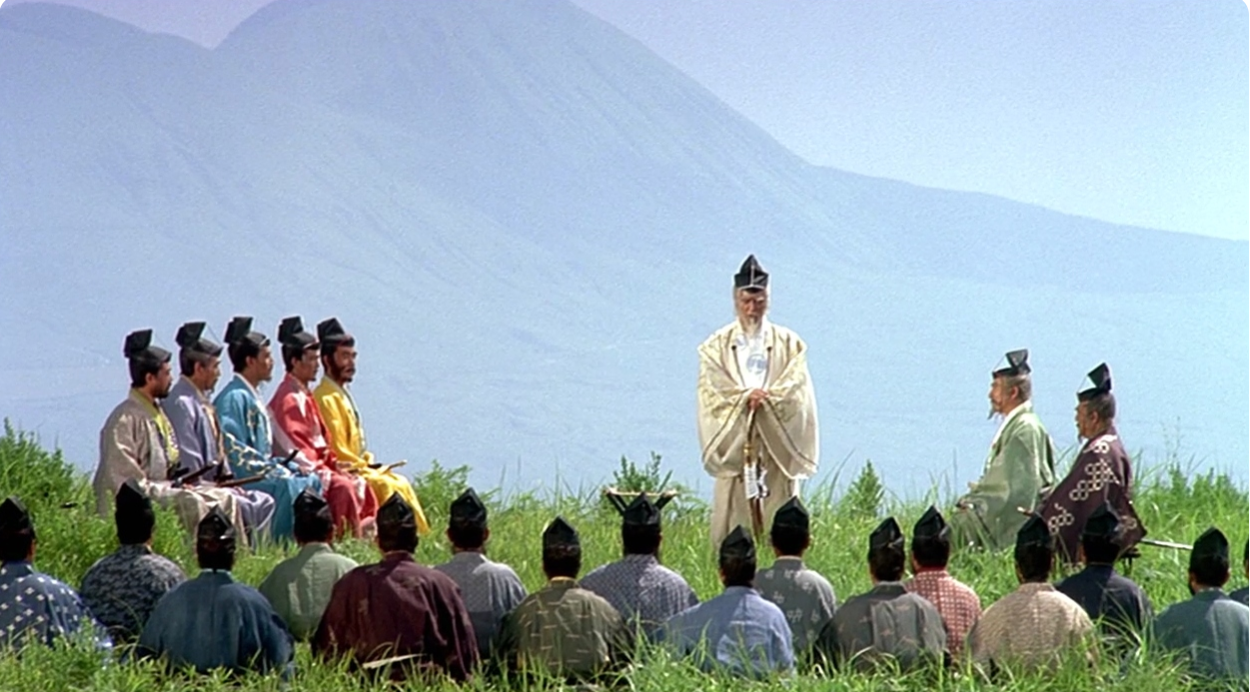
There’s something timeless about Asakazu Nakai and the way he approached cinematography. Working closely with directors like Akira Kurosawa, Nakai helped define the visual language of some of the most important films in cinema history. His style wasn’t about drawing attention to itself, but about enhancing the emotional weight and scale of the story. He had a deep understanding of composition and movement, often using the environment like wind, rain, and terrain to bring scenes to life. It made his work feel dynamic and grounded at the same time.
In films like Seven Samurai, his cinematography feels incredibly ahead of its time. The battle sequences are chaotic but still readable, with multiple layers of action happening at once, all captured with clarity and purpose. He used long lenses, movement, and weather elements to create tension and realism, making you feel like you were right in the middle of it. Even in quieter moments, his framing of characters within the landscape added emotional depth, showing isolation, unity, or conflict without needing dialogue.
What really makes Nakai stand out is how much of modern cinematography still echoes his influence. Techniques that feel standard today, like using motion within the frame or staging action across depth, were being pushed forward in his work decades ago. He wasn’t trying to create “beautiful shots” in a traditional sense, but rather images that served the story in the most powerful way possible. That focus on storytelling, combined with technical innovation, is what makes him one of the most important cinematographers to ever do it.
Leave a Reply